
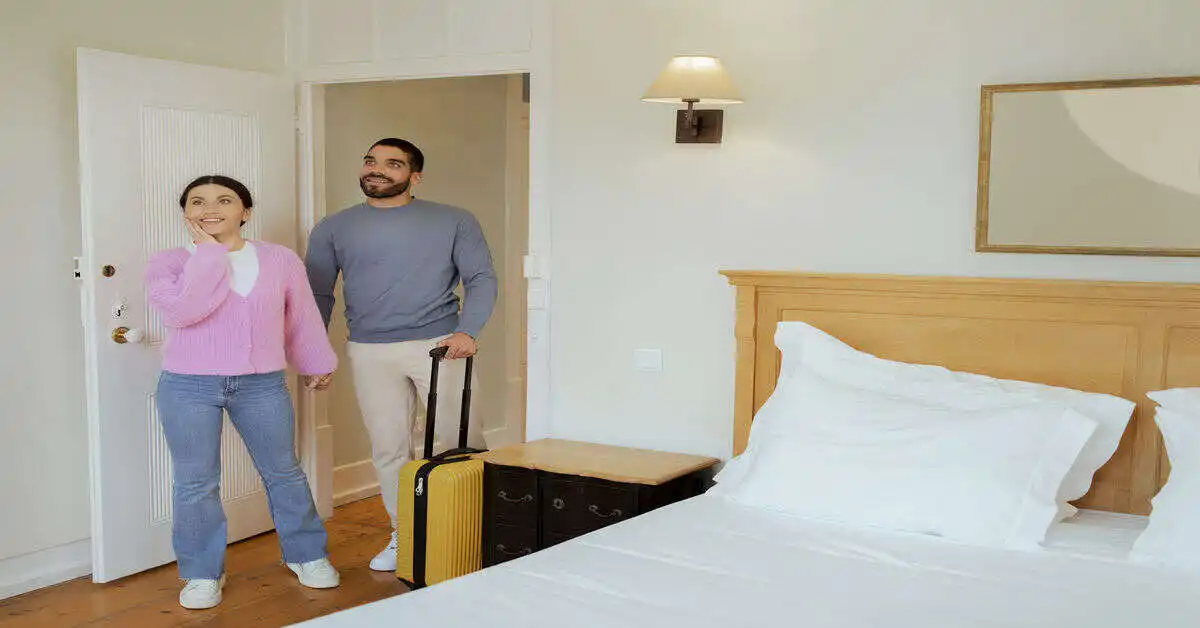
Choosing a place to stay is among the most important decisions you make, as the selection of accommodation boosts your comfort and convenience. The right place would boost your travel experience both in terms of comfort and convenience and will give you an experience of the local culture. On the other hand, one can make a bad decision, which may result in stress and dissatisfaction. You are spoiled with hundreds of different choices, luxury hotels, or comfortable bed-and-breakfasts? This article will present tips that are very important when selecting your stay in order to make sure that the accommodation will perfectly match your needs and preferences during the trips.
How to Know Your Accommodation Needs
It is important to know what you require in your stay before immersing yourself into the different accommodation alternatives. Think about the following questions:
What is your budget?
Decide on the amount of money you can spend in a night. This will aid in significantly reducing the choice.
What kind of experience would you prefer?
Do you want luxury, comfort or a local unique experience? Your decision will be based on your answer.
The number of people you are travelling with?
The number of guests may differ widely in regards to the accommodation requirements. The needs of families, couples and individual travelers are different.
What are the amenities you need?
Requirement of Wi-Fi, breakfast, pool, or pet-friendly? Compile a list of essential facilities.
What is your itinerary?
Look at where you wish to visit the attractions. By keeping within reach of things of interest, you can save on time and transport expenses.
Types of Accommodation
After you have a clear picture of what you need, then you have to investigate the various forms of accommodation. Each has its pros and cons:
1. Hotels
The most prevalent form of accommodation is the hotels. They differ in terms of budget to luxury and usually provide facilities such as room service, swimming pools and concierge services.
- Advantages: Uniform quality, a wide range of amenities, and in many cases, located in the best locations.
- Disadvantages: It can be quite costly compared to other alternatives and can also not have a local taste.
2. Vacation Rentals
Vacation rentals have become more popular through such platforms as Airbnb and Vrbo. These may include full houses to common areas.
- Advantages: They tend to be larger and are able to offer a local experience. Great for families or groups.
- Disadvantages: The quality may be very different and there may be extra cleaning or service charges.
3. Hostels
Hostels are inexpensive facilities that provide dormant-style rooms. They appeal to solo travelers and backpackers.
- Advantages: Cheap and very useful in making new friends.
- Disadvantages: Lack of privacy and in most cases shared bathrooms.
4. Bed and Breakfasts
The B&Bs are warmer and tend to be more intimate. They normally involve breakfast and are operated by local hosts.
- Advantages: Exclusive activities and the possibility to experience the locals.
- Disadvantages: restricted capacity and probably reduced facilities compared to hotels.
5. Resorts
Resorts are characterized by various activities and in many cases, meals, entertainment and entertainment facilities.
- Advantages: Everything can be included to make it easier to budget meals and activities.
- Disadvantages: It can be costly and be detached to local culture.
Critical Advice in selecting your Stay
Knowing what you need and what can be accommodated, it is high time to find out what you should know to make the best decision.
1. Read Reviews
Reviews made by past guests are worth reading before making a booking. The websites such as TripAdvisor, Google Reviews, and Yelp are helpful in informing about the standards of accommodations. Look for:
- General Ratings: Better rating means better experiences.
- Particular Remarks: Take note of remarks concerning cleanliness, service, and the amount of noise.
As an example, I have read numerous reviews of a beautiful hotel in Montmartre when I was planning my visit to Paris. Although most of them liked its atmosphere, some of them said that they can hear the noise of nightlife around. This information made me make the decision of purchasing a room on a higher floor, where there will be a quiet stay.
2. Check Location
The place where you stay can really have its effect on your travelling life. Use mapping tools to assess:
- Physical position of Attractions: The closer the attraction is, the more time can be saved when traveling.
- Safety: Investigate the neighborhood to find out whether it is safe, particularly in the event of you venturing around at night.
As an illustration, I selected an apartment in the Gothic Quarter on a recent visit to Barcelona. This site was quite convenient because of its proximity to major attractions such as the Cathedral and the La Rambla, which added to my general experience.
3. Compare Prices
Platform and booking sites may differ greatly in prices. The following are some of the tips on how to find the best deals:
- Compare Price Sites: Sites such as Kayak, Trivago, or Google Hotels will enable you to compare your prices with various sites.
- Book Direct: After you have found the perfect place to stay, visit the hotel or rental site to get the best prices or special deals.
One of my friends has just managed to save 20 percent by making his reservations on the hotel site rather than on a third party site. Most hotels have benefits such as free breakfast or room upgrades on direct bookings.
4. Understand Policies
Before you make your final booking, it is important to get to know the policies of the accommodation. Key issues to take into consideration are:
- Cancellation Policies: Change of mind: You can have a lot of flexibility with regards to cancellations.
- Extraneous charges: Watch out on additional charges like cleaning expenses, resorts charges or car park charges.
I was attentive to the cancellation policy when I was making a vacation rental in Costa Rica. A week before the check-in, the host refunded all the money, which made me feel even more safe in my traveling plan.
5. Look for Local Touches
Travelling can be made more enjoyable by selecting accommodation that would showcase culture. Seek out options that offer:
- Local Decor: Locales that exhibit the elements of local art or design.
- Culinary Experiences: B&Bs which have traditional breakfasts or hotels which have their menus consisting of local cuisine.
My experience in a B&B in Tuscany was great because in the mornings, I had homemade pastries and coffee and it was a lovely way of beginning my day. The owner also told me about the region and this made my visit even more memorable.
6. Consider Accessibility
In case you or a member of your group have issues with mobility, be sure that the accommodation is able to support such requirements. Look for:
- Lifts: of particular significance with multi-story buildings.
- Accessible Rooms: The restrooms and general areas should be wheelchair-accessible.
When I was on my way to London I requested a location where I could get a wheelchair. I researched hotels in particular that listed rooms that were compliant with the ADA so that I could have a comfortable accessible stay.
7. Ask About Amenities
There are different forms of accommodation and they have different facilities that can make your stay easier. Take into account what you need on the trip:
- Wi-Fi: Planning and staying connected.
- Breakfast: Saves money and time mostly during rush mornings.
- Laundry Facilities: Convenient in case of more extensive travel or family travel.
When we visited Thailand as a family, we chose a hotel that also has some laundry services. This luxury has enabled us to travel lighter and have our holiday in a clean clothes-free way.
Life Instances of Accommodation Making a wise Choice
In order to demonstrate the significance of careful accommodation decisions, I would like to share two of my personal stories:
Case Study 1: The Unintended Improvement.
During the process of reserving at Seattle on a last minute trip, I identified a boutique hotel that had good reviews and was affordable. On arrival, they were completely occupied and I was offered a suite on top of the charges! My stay was even more special as the suite was breathtaking because of the views it offered: the skyline of the city. The attention shown by hotel employees and their local knowledge that they gave me turned my trip into a memorable one.
During a visit to Rome, I first of all booked a hotel close to the train station, as it would be convenient. Nonetheless, having visited the territory, I understood that it was not what I wanted to see. I eventually moved to a hotel in the Trastevere neighborhood where I was able to walk to places such as the Colosseum and the Vatican City among others. This was not only saving my time but giving me an opportunity to explore the beautiful streets and local food places.
Conclusion
Hotel selection is one of the key factors in travelling. With knowledge of your needs, exploration and analysis of what to do, where to stay, and aspects related to the local culture, etc., you can discover the dream accommodation that will make your trip even better. Do not forget to read reviews, compare prices and be flexible in your options.
With these tips in hand, you will be well prepared in making your decisions about your accommodations hence making your traveling experience a good and enjoyable one. And that is why you should pack your bags, start your adventure and have fun on the way! Happy travels!